Ahimsa – Taking Care of Yourself & Others

Ahimsa

The first leaf on the first limb of the 8 limbed tree of Yoga is ahimsa.
Ahimsa roughly translated means to “do no harm”.

When Patanjali set out the eight limbed path of yoga sometime between 100 BCE and 100 AD, it appears that his intent was to tersely codify the previous 4000 years of yoga wisdom.  He did a very fine job of it.  Laying out in short simple verses (sutras), the wisdom of yoga as it had been taught until that point.  He stated that there are 8 limbs on the tree of yoga; yamas (personal practices), niyamas (community practices), asanas (postures), pranayama (breathwork), pratyahara (withdrawal of senses), dharana (concentration), dhyana (meditation) & Samadhi (ultimate enlightenment).  

So, ahimsa – do no harm – is the very first thing we must strive to do as yogis.  It makes sense.  Every spiritual/philosophical path I know embraces this philosophy.  But in yoga, the goal is not only to save random spiders from their doom and avoid taking swords up against our neighbors, but we are also encouraged not to commit harm against ourselves.

This is difficult.  We live in a world where we are constantly bombarded with messages about how thin we should be, what cars we should drive, what knowledge we should have, what clothes we should wear, etc. All this in order to be happy.  So it is no surprise that many of us beat ourselves up trying to fit ourselves to this commercial image of what we are supposed to be, all with varying degrees of success.

This dissatisfaction with how we look or feel, may be what got us to yoga in the first place.  “If I just take that class, I will loose weight, get better muscles and maybe that nagging ache in my back/neck will go away.”

In mind my, there is nothing wrong with this.  Whatever gets you in the door and on the mat is good.  But I do worry about negative self speak, and not listening to the cues our bodies are sending us. Practice Ahimsa – do no harm – to others or yourself, through your actions or through your speech.

I read somewhere that we process over 60,000 thoughts a day. Unfortunately, the majority of these thoughts are less than complementary.  It turns out that we are experts at self criticism.  I know from experience that while I am pretty good at being kind to others, I am pretty rotten at being kind to myself.  I frequently hear all those would’ves should’ves.

Thus the trick really is to practice ahimsa with our selves.  When you go to yoga, listen to what your body needs.  Don’t push yourself too hard just to get that firm butt and those strong biceps. Don’t get me wrong, I have nothing against those, but not at the sake of physical or spiritual injury.  Don’t try to do some else’s practice.  Don’t try to do more than you are ready for in the moment.  Yes, push your boundaries, but don’t hurt yourself.  Be kind and compassionate and loving with yourself.  And then from that foundation, you will find yourself expanding and reaching farther than you ever could from a place of self-criticism.


Shalom & Namaste,

Diana Bonyhadi

Great News at Kharma Bella Yoga

Great News at Kharma Bella Yoga

Yoga Wall: Come check out the new addition to the Kharma Bella Studio.  We have installed a yoga wall.  Book a private session and experience the amazing benefits of working with a rope and wall system for enhancing your asanas and healing your body. Just drop me an email, or give me a call, and we’ll get you set up for your introduction to the wonders of the yoga wall.

Speaking of Privates:  I highly recommend them.  They are great for tuning up your practice, exploring poses deeper, or working at a more therapeutic level, that can only be achieved when working individually with your teacher.  Privates are also great as an introduction to yoga.  If you know of someone who has been hankering to try yoga, but is worried about going to a class of Gumby bodies and feeling left out, this is a great and safe way to discover yoga.

Radio:  I have signed on to co-host a radio show on Mondays at 1:00pm on 1150AM  KKNW.  (I know, this is big news. It took a real leap of faith for me.)  I am joining the wonderful Ajayan Borys of Effortless Mind Mediation on Mind Matters Radio.  Together we will be exploring the intersections of yoga and meditation and all things glorious about your mind, spirit and body.  Tune in next Monday to hear about the first yama, Ahimsa (non-violence) as I discuss the many (obvious and not so obvious ways) this weaves through our lives and our practice.

Music:  Here is a treat: The Toure-Raichel Collective: Wonderful acoustic music. Check out this link, and maybe even attend their show April 28th at the Triple Door.  Thank my son Ben for the link.

Classes continue to fill and expand. Be sure to arrive with enough time to get signed in and settled in, so you can fully enjoy your wonderful self in class.

Happy Spring,
Shalom & Namaste,

Diana Bonyhadi

Challenging words, an encouragement for change

Read this and re-awaken to the miracle that is your life.


Thanks to Andrea Leber


Challenging words, an encouragement for change.

Questions of a Snowbound Yogi

Living without power – Yoga lessons for all of us

In case you missed it, Seattle was snowbound for most of last week.  Snow and ice-covered the streets and houses and trees.  Driving was treacherous, and many folks lost power.

Running a business was stressful.  To close or not to close?  That was the question of the day.  And then how do you notify folks that the business was or wasn’t closed, when you don’t even have power or internet access?  How to send the message and who will get it?

Here are some of the questions/issues that many in my community had to deal with.  These are questions which were brought to the fore by the snowstorm, but really, these are  questions that bear investigation regardless of the weather.

  • How do we deal with the unexpected?
  • Can we live with not knowing?
  • Can we live without transportation?
  • Can we live without our computers?
  • Do we have enough food/candles/water in our homes in case of emergencies?
  • What do we do when we don’t have heat or electricity?
  • Do we have friends we can go to in times of emergency?
  • How comfortable are we with spending 6 days alone with our families?
  • How comfortable are we with silence? No ticking clocks, computers, washers, etc.
  • What do we do when our to-do list can’t be completed?

For all of us yogis, we had the added challenge of figuring out where our practice really was.

  • If you can’t make it to the studio, do you still practice?
  • If your house is filled with people, and no heat, do you still practice?

And then… the power comes back on.

  • How do we respond?
  • How quickly do we rush back to our lists of things to do?
  • Are we overwhelmed by trying to all that we didn’t do and all that we still must do?
  • Do we wish (surreptitiously) for more snow and less power?
  • How do we capture those moments of silence in our daily life?

That seems like more than enough to chew on for one day.  Happy thinking.  I welcome you thoughts and comments.

Shalom & Namaste,
Diana Bonyhadi

Even Yogis Procrastinate

Hi Everyone,

I just wanted to let you know that living the life of a good little yogi does not prevent me from being a procrastinator.  You might have noticed that I didn’t update this blog for three weeks.  Guess what, that is not the only thing I managed to put off.  The list is embarrassingly long; I found the most amazing ways to avoid doing house-cleaning chores, desk work, paper work, and I even put off making my new years resolutions.  But  now I am playing catch-up and I thought I would share some of my New Years resolutions with you:

Resolutions for a Procrastinating Yogi

  • Meditate for 15-45 minutes every morning. (So far so good)
  • Cook a new dish every week  – that would be 52 new dishes this year.  Hopefully I will also teach a few of these to my kids.  Here are the cookbooks and websites from which I will draw inspiration:    Plenty by Yotam Ottolenghi (http://www.ottolenghi.co.uk/blog/category/recipes/), Natural Cooking Everyday, (http://www.101cookbooks.com/) Eat, Taste Heal – An Ayurvedic Guidebook and Cookbook for Modern Living (http://www.eattasteheal.com/ETH_dosha.htm) , and Terrific Pacific Cookbook (http://www.amazon.com/s/?ie=UTF8&keywords=terrific+pacific+cookbook&tag=googhydr-20&index=stripbooks&hvadid=5435336785&ref=pd_sl_39829tmzyo_e).
  • Study more anatomy:   Wow, did you know you can watch human dissections online.  Just type in a body part and the word “dissection,” and you will be amazed at what you can watch and learn.  Yea, I am an anatomy geek.
  • Study with amazing yogis.  I am already signed up for two intensives – I can’t wait till next weekend when I will be studying the anatomy of the neck and shoulders and learning some more thereapeutic yoga approaches for healing common injuries to this region.  Can anyone say rotator cuff?
  • Try out new local activities: We have so much to do here in the Seattle Area, there is no reason I can’t try at least one new adventure per month (hiking, kayaking, canoeing, climbing, museums, wakeboarding, etc).  Really I should make it 2 new activities a month, but if every one is as satisfying as this week’s adventure, I know I will be repeating them.  Friday I went to the Seattle Bouldering Project and did some rockclimbing.  What a blast, and a tremendous work out.
  • Visit a National Park:  Last year I went to Yellowstone, where shall I go this year?
  • Nag Less, Enjoy More:  It is too easy to see what bugs us first, and then try to find that which deserves celebration.  My goal for this year is to spend more time celebrating and enjoying life; my kids, my husband, my friends and my community and less time focusing on the negative.
  • Try not to procrastinate too much…..and then don’t kick myself too hard for being a procrastinator.

Happy New Year,

Shalom & Namaste,

Diana Bonyhadi

Miracle of Life

Just in case you didn’t get a chance to go outside today and see the beauty of the snow-capped mountains, and the glow of the last remaining leaves, I offer you this short film from TED Talks.  There is inspiration all around us.  And sometimes it takes the mathematicians to show us the way.


Also, a poem by Omar Khayyam (11th century sufi mystic) for your enjoyment:

For in and out, above, about, below,
‘Tis nothing but a Magic Shadow-show,
          Play’d in a Box whose Candle is the Sun,
Round which we Phantom Figures come and go.

Enjoy & Namaste

Diana Bonyhadi

Living Your Dharma

Living your Dharma

Insights from the Bhagavad Gita

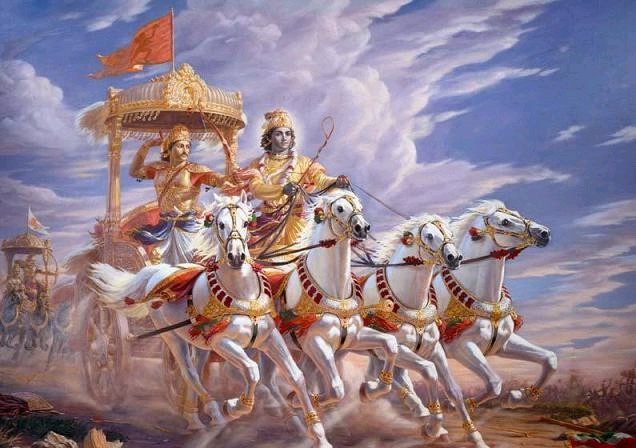
Action is a duty, but let not your ego crave the fruits of action, be not attached to either action or inaction.
Bhagavad Gita, Chapt 2, vs. 47

Okay, you are in your yoga class.  You are feeling great.  The asanas are humming in your body.  The prana is flowing.  You feel alive, strong, flexible, vibrant with life.  And the next thing you know your teachers throws you a new asana, one you have seen in books, but have never before tried.  And you think, “that’s it.  I am going to master that.”

“Bend the knees, place your right elbow in your right armpit, lift up and reach your left leg out behind you in the air.”

Splatt.  Before you know it, you are in a heap on the ground.  This is when you hear the loud voice of the Ego coming through.  The string of thoughts that go rampaging through your brain – anything from “get up before anyone sees you”, to “I told you that you are not strong enough, flexible enough, whatever enough to do this yoga stuff.”

Ah, now you can really practice your yoga.  For it is not about mastering any particular pose.  Yoga is about being present in the action, in the moment, for the sake of the action itself, and NOT for any specific rewards that will be achieved as the result of an action.

The other day I was trying to learn how to float up into a handstand, and then down into crow.  Try as I might, I could not seem to raise up through that lovely pike position into a handstand and then settle down so that my knees rested lightly on my biceps.  Soon I found myself obsessed with self-doubt.  “I will never be able to do this.  I am too old for this.  I will never have a strong enough core…”  And then thankfully, I was reminded that the only thing that really mattered was the effort in that moment.  I needed to let go of the fruits of my actions.  I won’t tell you that after this awakening I suddenly did find myself floating effortlessly through the air. No, but my practice did get lighter.

The next day I came across the above cited verse, and breathed in relief.  Even Arjuna, that mighty warrior, had to be reminded not to hold too fast to the results of his actions.  We are here to live our dharma.  There are many things we try and do, and the blessing lies in the doing.  So, whether it is handstands, cartwheels, mountain climbing or other tasks like dishes and laundry and floors, remember to breathe into the moment and let the fruits of those actions be – without prejudice or celebration.  This is yoga, living and breathing in this moment and the next.  This is living your dharma.

Shalom & Namaste,
Diana Bonyhadi

Brahmacharya – A new look at an age old practice

Brahmacharya – a modern conceptualization.

Brahamacharya is the fourth of the yamas, which compose the first limb of the yoga tree.  The yamas articulate the ways in which we should intereact with one another in our yogic path.  The first of the yamas are pretty easy to digest; ahimsa – the practice of non-violence, satya – truthfullness, asteya – non-covetessness, and then we get to brahmacharya.  I spent some time this morning looking up the word Brahmacharya.  This is the most precise definition I could find.  Thank you wikipedia. The word brahmacharya stems literally from two components:

  • Brahma, (shortened from brahman), the absolute, eternal, supreme God-head. (As opposed to Brahmā, the deity in the Hindu triad responsible for creation).
  • charya, which means “to follow”. This is often translated as activity, mode of behaviour, a “virtuous” way of life.

So the word brahmacharya indicates a lifestyle adopted to enable one to attain the ultimate reality.

The most common working definition of Brhamacharya is celibacy.  Restraining from spilling vital sexual energy.  Many respected sources cite the health benefits, both physical and spiritual of restraining and redirecting powerful sexual energies.  Ok, fine.  If I want to progress in my path towards attaining the ultimate reality, I am going to have to give up sex.  Not.  And honestly, I think I am not alone here.  There are many of us on the yoga path who are interested in living more fully in accordance with the yamas and niyamas, and this one presents the biggest hurdle.

So what would a working definition of brahamcharya be for those of us who will not be retreating to a monastery in the near future?

If we take the intention behind the words, I think living a life of moderation, restraint, consistency and respect for ourselves and others would be an apt definition.  Further, if we resist from spreading ourselves too thin, if we resist from spreading our seeds to far and too often, then we can be more present in any given moment. And in today’s culture, that is a difficult thing to do.  There are so many demands upon our time and energies, it is difficult to choose when to engage and when to hold back.

I have a husband, 3 kids, a job, a home, a garden and pets.  All of these place demands on my time.  I also have a job, I do community service and I have friends.  I want to be able to give to and support my family, and friends when they are in need.  I want to do well at my job and support my community.  Thus the real question is how best to support them without draining myself.  If I continue to give and give, there could well come a time when I am too drained to be present for those whom and I love and who are in need.

You know what I am talking about here.  Your youngest spills the milk, the phone rings, the dog runs through the milk onto the new carpet and you go bezerk.  She begins to cry, and shortly so do you.  It’s not that the spilt milk was such a big deal, it’s just that you are overwhelmed.  You have been trying to do too much for too many.  You have spread yourself too thin.  Your ability to reside in a place of wholeness is gone.  At this moment you cannot walk the path of the Brahmin, because you are to tired, too drained and too scattered.

So what to do?  Practice yoga.  Take time out everyday to do some asanas, some pranayama, and some meditation.  And this doesn’t have to de a daily marathon session.  Grab a few minutes here and there to stretch, to breath, and to focus on the present moment.  Five minutes of meditation will go a long way towards restoring your inner balance.  Try not to say yes to every project, every job opportunity, every community service need.  Turn off the extra noise in your life – the computer, radio and TV do not always have to be on.  Your cell phone is a cool and useful tool, but you don’t always have to answer it or check emails at every traffic light.  Give yourself some space for quiet.  Practice restraint.  Don’t try to be everything for everyone.  Don’t spill your seed too often, don’t spread yourself too thin.

Walking the path of the Brahmin is not impossible, but it is difficult.  Learning how and when to say no, so that we can be more fully present when we need to be is the challenge.  That and learning to take care of ourselves in the midst of all the chaos of daily life.  So, embrace your life, celebrate the joys, live your yoga beyond the mat, and know that you do not have to become a monk to practice brahmacharya.

Shalom & Namaste.
Diana Bonyhadi

Practicing Yoga and Forgiveness

In the Jewish Tradition, this past week and weekend were the holiest of Holy Days – the Days of Awe.  For 8 days, Jews the world over, participated in a period of reckoning. In preparation for the Jewish New Year, we have spent a week looking back over the year and doing a little personal housekeeping.  We our paid off our debts, reconciled our promises, and made amends.

We spend quite a bit of time focused on the following phrases.  They are simple and profound.  Just a couple of sentences which encompass just about everything.

For all the things I have said or done consciously or unconsciously which may have caused pain and suffering to others, I am sorry, please accept my apology.
For all the things I have said or done consciously or unconsciously which may have caused pain or suffering to myself, I am sorry, please accept my apology.

There you have it.  An acknowledgment that even when we don’t mean to, we can do things or says things that are hurtful.  I know this one pretty well.  I have a tendency to open mouth – insert foot.  I have the best of intentions, but sometimes things just don’t come out the way I envisioned and people get hurt.  I am sorry, I really didn’t mean to.  Or sometimes my commitment to honesty gets in the way.  I know, not everyone needs to know how I really feel or think about something.  I am sorry.

Then there are those time when I fail to speak up about the things that are really important – politics, the environment, community issues, etc.  Sometimes, I fail to say or do what needs doing/saying.  For those moments of omission, I am sorry.

Now for the big one.  For all those times when I hurled unjust judgments and recriminations at myself, I am sorry.  I know I must be willing to give myself a chance to be human, and therefor fallible.  I must let go of all those “would’ves and should’ves” and just let the past be the past.  This is so hard, I really want to be a better person. I hate screwing up.  But I have to be willing to forgive myself.  We all do.

In yoga, we strive to stay in the present moment and connect with the interconnectedness that we are.  We move and breath, hopefully linking our breath with the movement, to assist the brain in settling in to the present  We practice asana and pranayama so we can sit in mediation, focusing and releasing the thoughts, slipping into the eternity of the here and now.  And it is a challenge.  That is why Patanjali in Sutra 1:14 states that “the practice becomes fully grounded with we attend to it over time, without a break and with earnestness.”  In other words, keep trying, don’t give up, and do this practice with care, and effort.  Be serious about it.

So, yea, I know I make mistakes, we all make mistakes.  We are human.  The trick is to keep trying and  to pay attention to our thoughts and deeds.  Try to not to hurt others or ourselves.  This is the essential practice of Ahimsa.  And next year when Yom Kippur rolls around, maybe the sorry-list will be shorter, and maybe it won’t, but if we will keep trying to attend and be earnest in the effort, the world will be a better place.  And that’s what its all about, isn’t it?

Shalom & Namaste,
Diana Bonyhadi

Living Sutra I:33 – Life with Joy and Balance

May I be happy. 


May I be peaceful. 


May I be safe from harm. 


May I enjoy happiness and the root of happiness. 


May I experience ease and well-being in body, mind, and spirit.

Today has been perfect, and I am only half way through.  I attribute it to my morning meditation on Pantajali’s Yoga Sutra 1.33.

maitri karuna muditopeksanam sukha duhkha punyapunya visayanam bhavanatas citta prasadanam
Tranquility of thought comes through the cultivation of friendship, compassion, joy, and impartiality in spheres of pleasure or pain, virtue or vice.

There are 4 words that stand out for me in this sutra, and they are:  Metta or maitri (lovingkindness); Karuna (compassion); Mudita (joy); and Upeksha (equanimity).  Patanjali places these words in balance with their opposition.  Yes, in difficult situations and with difficult people it is especially important to cultivate joy, compassion and equanimity.  But what really resonated for me today, was the importance of living fully in the moment, aware of the need to bring joy, compassion, kindness and balance into all aspects of my life.

 
Thus, I started today’s class with the prayer/chant above.  We then moved into a practice that allowed everyone to deepen and yes, sweat.  We did vinyasas, we did the sagital series, we did arm balances, head stands and more, but the best came at the end.

Because our focus was on staying happy, and peaceful, and practicing compassion, everyone slipped gracefully into Svasana.  I could feel the room melt.  The pranayama practice and the meditation happened effortlessly.  We were all breathing together.  Breathing in to a place of peace and joy.  There a a tangible sense of letting go and letting in.  It was truly a moment of blessing.

And then after class, I got to totally yoga-geek-out with my good friend Pat.  We played with hand-stands and arm-balances and jump-throughs.  I still have yet to master lifting up into a handstand with legs together but we got awfully close.  And again, I think it all worked so well, because I came to it from a place of Mudita/joy, and Upeksha/equanimity.  I left the need to “conquer/master” and just went to have fun with some cool and challenging asanas.  And it worked.

 
Later in the afternoon, I got to romp in the woods with my dog.  The air smelled so good, and the leaves were just changing colors.  because I didn’t stress out about my to-do list, I was able to get that one more thing in.

So, I just wanted to let you know that, yes, today it worked.  Starting off with a meditation on balance and joy and compassion, can and does make a difference.

Now it is off to feed kids, make dinner, run errands, drive kids and teach again.

Have a great day

Shalom & Namaste,
Diana Bonyhadi